



Drivers see blue. Drivers
slow down.
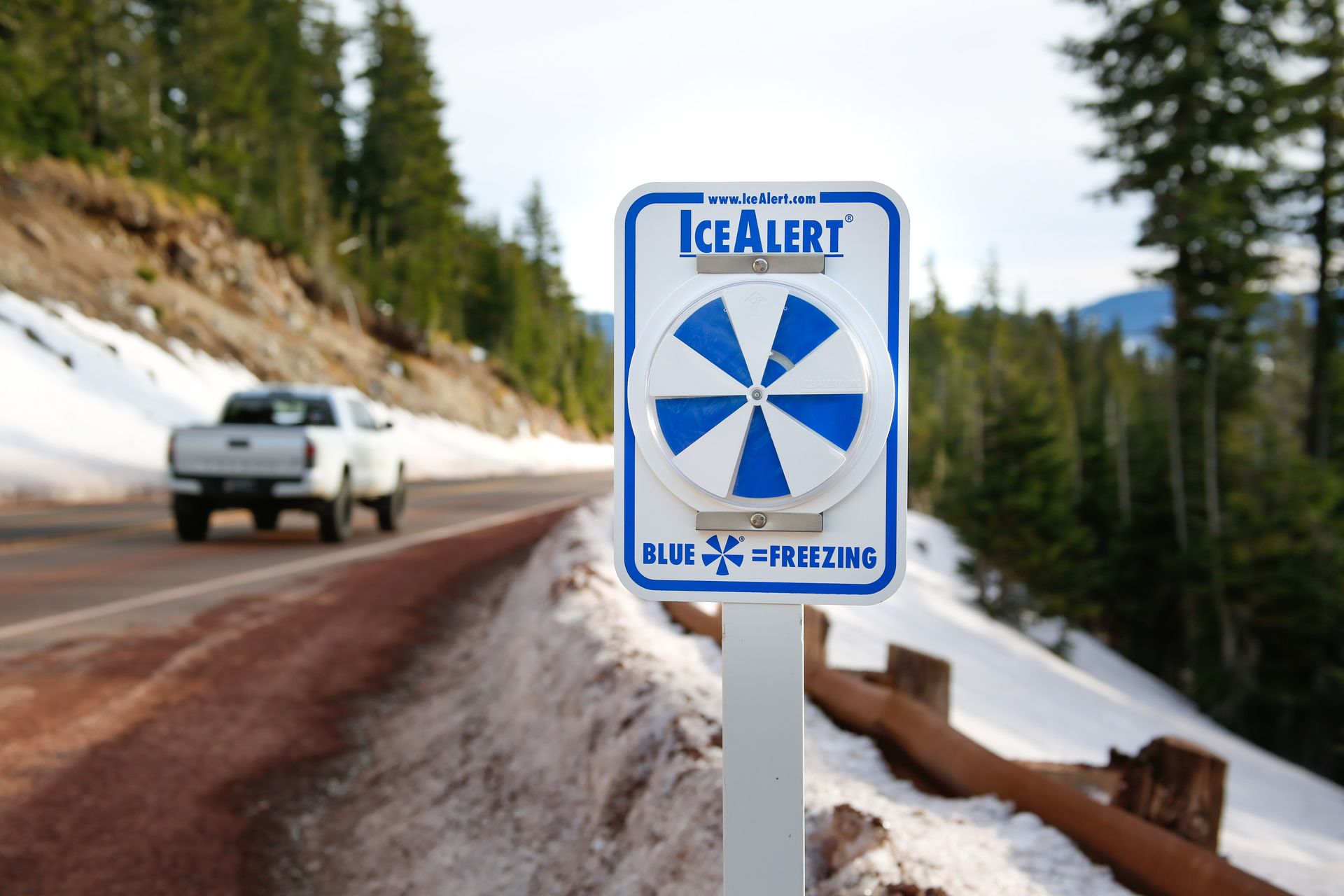
IceAlert's Bluestar System® uses temperature-sensitive reflectors that mount on standard guideposts. They act as normal delineators — until temperatures approach freezing. Then they turn blue, warning motorists of black ice before they hit it.
38°F
Shows blue when ice is possible
0 Watts
No power required
USA
Made in Oregon
How bluestar works
Passive, mechanical, and visible at night - every night.
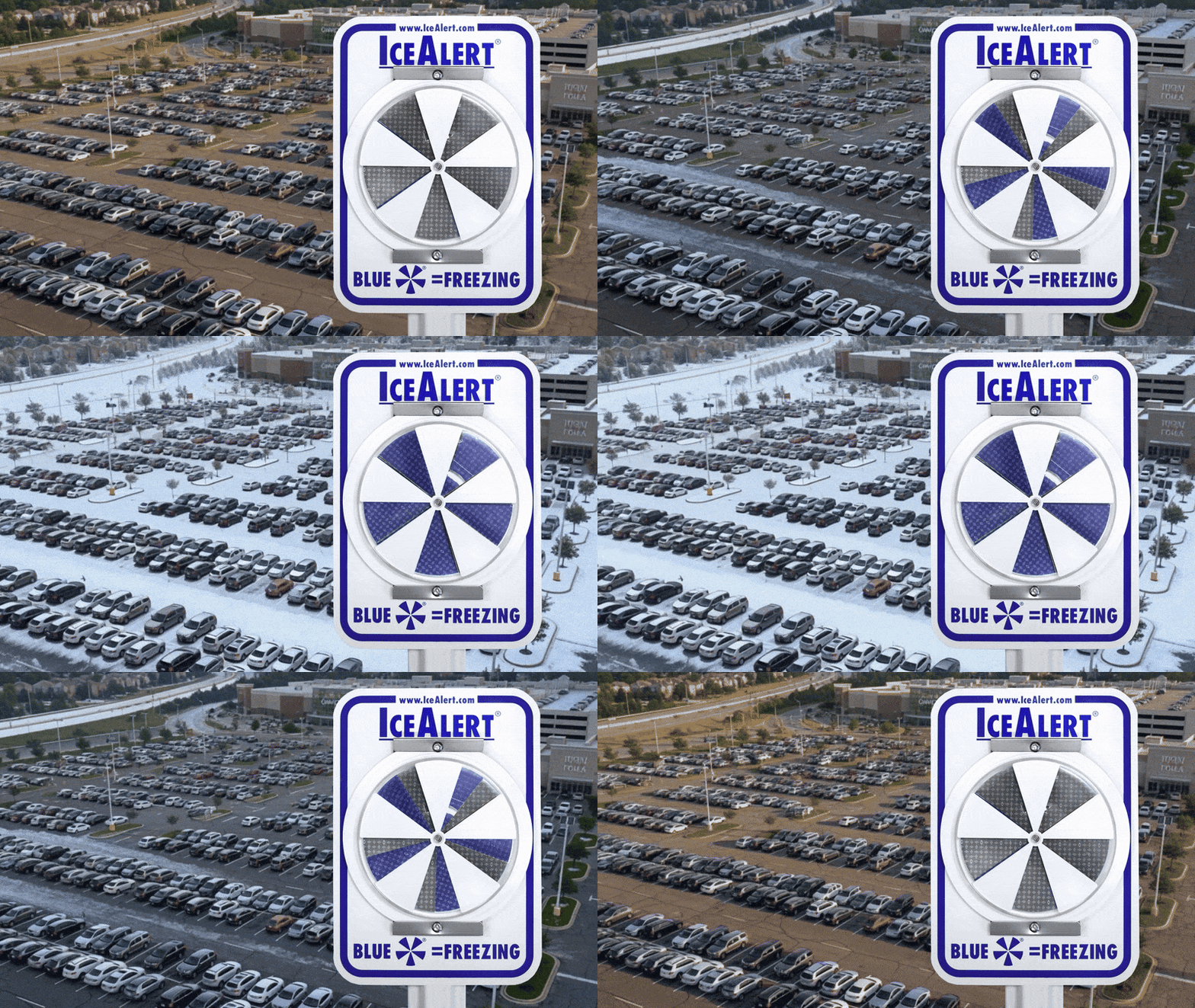
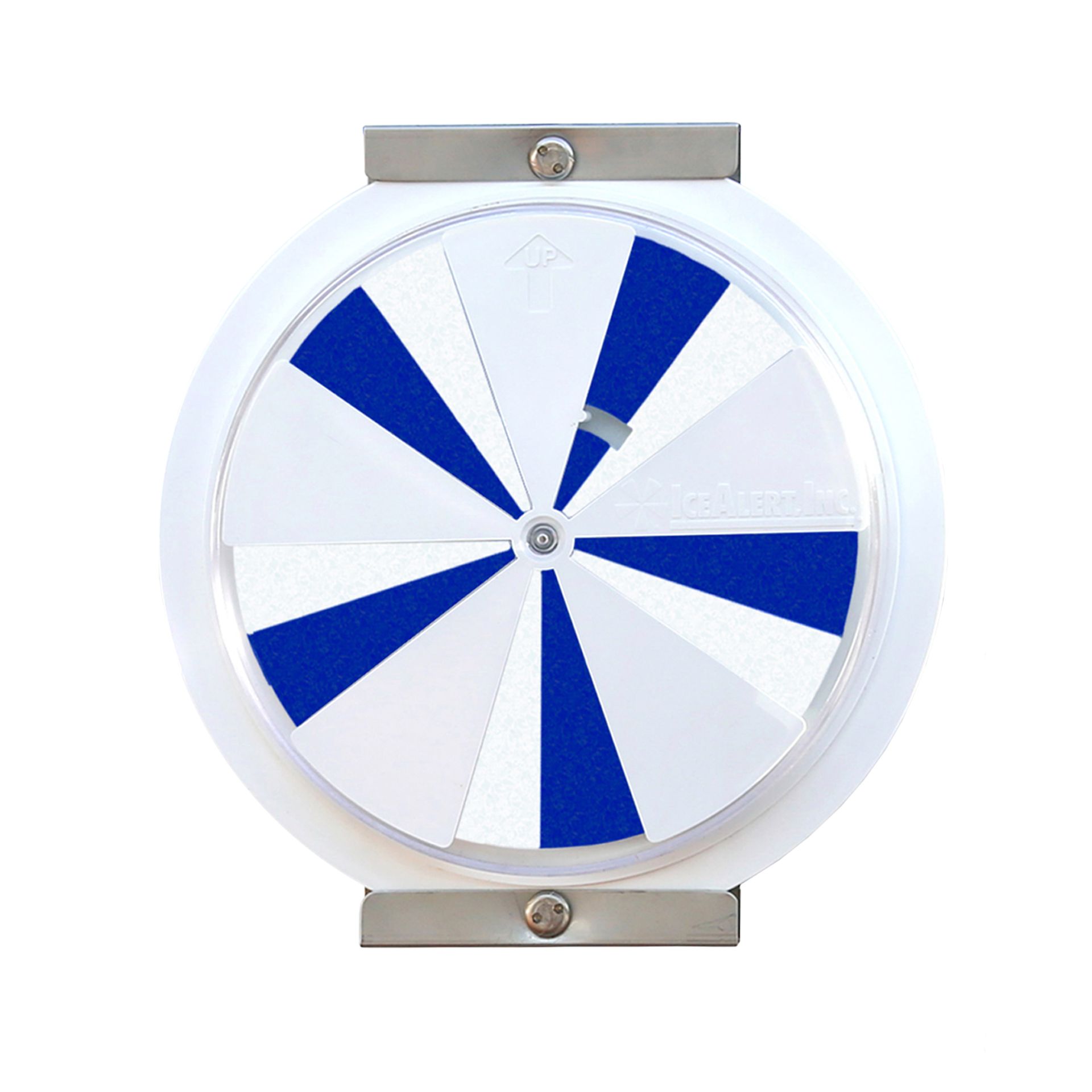
No power, no batteries, no maintenance. Bluestar reflectors work the same way as the IceAlert pedestrian system — temperature-sensitive indicators that change from standard reflective white to reflective blue starting at 38°F.
1
Mount on standard guideposts
Reflectors bolt to existing guideposts or new posts. Installation uses standard hardware — no pavement cuts, no wiring, no special tools. One crew can deploy a site in a single shift.
2
Normal reflectors until freezing
In warm conditions, Bluestar reflectors function as standard road delineators. Motorists see normal reflective markers. No false alarms, no ambiguity — the system is invisible until it matters.
3
Full blue at 32°F
When surface temperatures approach freezing, the bimetallic indicator turns the reflectors bright blue. Drivers see the color change well in advance of the hazard zone, giving them time to reduce speed.
The problem
Black ice is invisible. The consequences aren't.
Bridge decks, overpasses, off-ramps, and shaded curves freeze first — often while the rest of the road is clear. Drivers have no warning until they're already on it.
156k
Crashes annually in the U.S. caused by icy road conditions, per FHWA data.
1,300
Fatalities per year attributed to icy pavement — more than tornadoes and hurricanes combined.
$0
Ongoing operating cost for Bluestar. No power, no telemetry, no subscriptions, no maintenance contracts.
*FHWA Road Weather Management data
where to deploy
Anywhere that freezes before the rest of the road.
Bluestar reflectors are most effective in a series of 3–5, positioned well in advance of the hazard zone so drivers have time to react. Spacing matches standard guidepost reflector conventions.
MOST COMMON
Bridge Decks & Overpasses
Elevated surfaces lose heat from above and below, freezing hours before adjacent road. The #1 deployment site for Bluestar nationwide.
HIGH RISK
Off-Ramps &
Curves
Speed transitions combined with unexpected ice are the deadliest combination. Bluestar warns drivers while they're still on the straightaway.
OVERLOOKED
Shaded Road Sections
Tree cover, hillsides, and north-facing cuts create microclimates where ice persists long after surrounding pavement has cleared.
MOUNTAIN
Mountain Passes & Grades
Elevation changes mean temperature changes. Bluestar marks the transition zone where conditions shift from wet to icy.
MUNICIPAL
Known Trouble Spots
Every DOT has a list of intersections and curves that freeze first every winter. Bluestar makes the invisible hazard visible — permanently.
PRIVATE
Campus & Facility Roads
Corporate campuses, hospital access roads, university drives, and private roadways with known icing problems.
38°F
ACTIVATION TEMPERATURE WHEN ICEALERT BEGINS TO SHOW BLUE
3 - 5
Reflectors Per Site
Recommended Series
0 Watts
No Power Required.
No Batteries. No Wiring.
Std
Guidepost Mount
Standard Bolt Pattern
free - custom for your site
Send us your site. We'll design the system.
Every Bluestar installation is different. Traffic speed, topography, sight lines, and the hazard zone itself all determine reflector count, spacing, and sign placement.
Send us a simple site description — a bridge name, an off-ramp number, a Google Maps pin — and we'll design a complete installation plan with reflector placement, spacing, sign locations, and a hardware list. Free, no obligation
common questions
What DOTs and engineers ask before deploying Bluestar.
Warn drivers before the ice does.
Orders typically ship in 1 business day. Or send us your bridge, overpass, or trouble spot. We'll design the installation and send you a complete plan — free.