


Summer Is Here. Which Means Winter Is Coming. Is Your Facility Ready?
Summer is the best time to prepare your facility for winter ice hazards. Learn the 5 steps EHS and facilities managers should take before the season starts.
It's easy to forget about ice when the sun is out and temperatures are climbing. But for facilities managers and EHS professionals, summer isn't a break from winter safety planning. It's the best time to do it.
By the time October arrives, your budget is locked, your vendors are chosen, and your maintenance team is already stretched thin. The facilities that handle winter best aren't the ones scrambling in November. They're the ones who spent twenty minutes in July making sure everything was in place.
So while the weather is on your side, here's what to think through now.
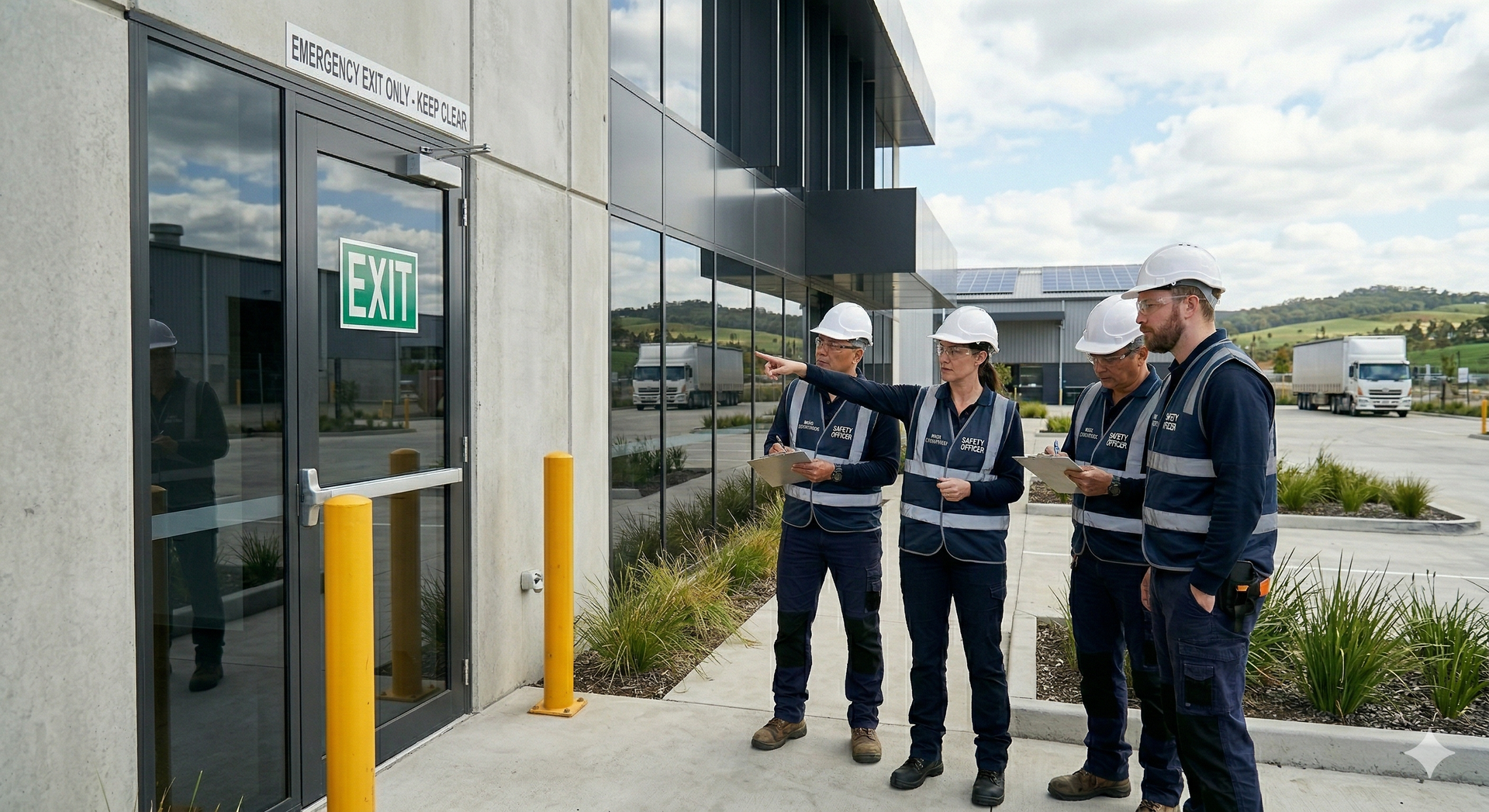
1. Walk Your Property Like It's January
This sounds simple, but most facilities teams never do it. On a clear summer day, walk every entrance, exit, stairwell, loading dock, parking area, and outdoor walkway on your property and ask yourself: what happens here when it's 28 degrees and there's been overnight freezing?
Look for north-facing surfaces that stay shaded and freeze first, metal grate stairs or bridges that ice faster than surrounding areas, low-lying areas where water pools and refreezes, and high-traffic exterior exits where employees move quickly and aren't thinking about ice.
Document what you find. Take photos. Mark it on a site map. This becomes your winter hazard inventory, and it's the foundation of any serious slip and fall prevention program.
2. Audit Your Warning System Honestly
Most facilities rely on one of two approaches for ice warnings: posted static signs, or nothing at all.
Static signs have a fundamental problem. They warn about ice whether it's freezing or not. When employees see the same "Caution: Icy Conditions" sign every day regardless of temperature, they stop reading it. It becomes wallpaper. And on the one morning it actually matters, when overnight temperatures dipped to 29°F and the parking lot entrance is a sheet of black ice, nobody notices.
A warning that's always on is effectively no warning at all.
The most effective ice warning systems respond to actual conditions. Temperature-sensitive indicators like IceAlert® change color automatically when temperatures approach freezing, giving employees a real, visible signal only when conditions are genuinely dangerous. No power, no batteries, no maintenance. Just an honest, automatic alert exactly when it's needed.
Summer is the right time to evaluate what you currently have, identify the gaps, and install anything new before the season starts. Installation takes minutes. Waiting until November means rushing, or missing it entirely.
3. Review Last Winter's Incidents
Pull your incident reports, near-miss logs, and workers' compensation claims from last winter. Look specifically for any slip, trip, or fall involving ice or cold surfaces, near-misses that were reported but didn't result in injury, and locations where multiple incidents clustered.
The locations that show up repeatedly are your highest-priority areas for intervention. A single unaddressed ice hazard that causes one workers' comp claim costs an average of $64,000 in direct and indirect costs according to OSHA. Fixing it proactively costs a fraction of that.
If you had a clean winter, that's great. But don't assume it was your systems working. Ask whether it was luck, mild weather, or genuine preparation. The answer matters for what you do next.
4. Confirm Your Maintenance and Response Protocols
A great warning system only works if your team knows what to do when the warning activates. Summer is the time to confirm who is responsible for monitoring conditions and deploying salt or sand, what the response protocol is when freezing is forecast overnight, whether your maintenance staff are trained on the highest-risk areas identified in your walkthrough, and whether you have adequate supply of ice melt, sand, and traction aids on hand before the season starts.
Vendors run low on ice melt products in January. Ordering in September means you're covered regardless of how severe the winter turns out to be.
5. Lock In Your Budget Now
Winter safety improvements are almost always easier to fund in the summer budget cycle than mid-season. If you need to add temperature warning indicators, update your ice melt supply contract, or invest in better lighting at exterior exits, the time to make that case to leadership is now. Not in October when the first frost hits and everyone is suddenly paying attention.
Build a simple one-page winter safety audit summarizing your hazard inventory, last year's incident history, and your recommended interventions. Attach a cost estimate. Present it in your next budget meeting. This is exactly the kind of proactive safety management that distinguishes high-performing EHS programs from reactive ones.
The Bottom Line
Winter slip and fall accidents are among the most preventable workplace injuries and among the most expensive when they happen. The facilities that consistently avoid them aren't doing anything complicated. They're simply preparing in the off-season, when there's time to think clearly and act deliberately.
Take an hour this month to walk your property, review last winter's data, and make sure your warning systems are honest, visible, and automatic. Your employees and your insurance carrier will thank you.
IceAlert® temperature-sensitive indicators have been protecting employees and visitors at facilities across North America since 1998. Trusted by Amazon, Ford, 3M, Intel, and hundreds of safety-focused organizations, IceAlert turns blue automatically as temperatures approach freezing. No power, no batteries, no maintenance required. Learn more or request a free site assessment at icealert.com.