



Your People Know It's Hot. They Don't Know It's Dangerous.
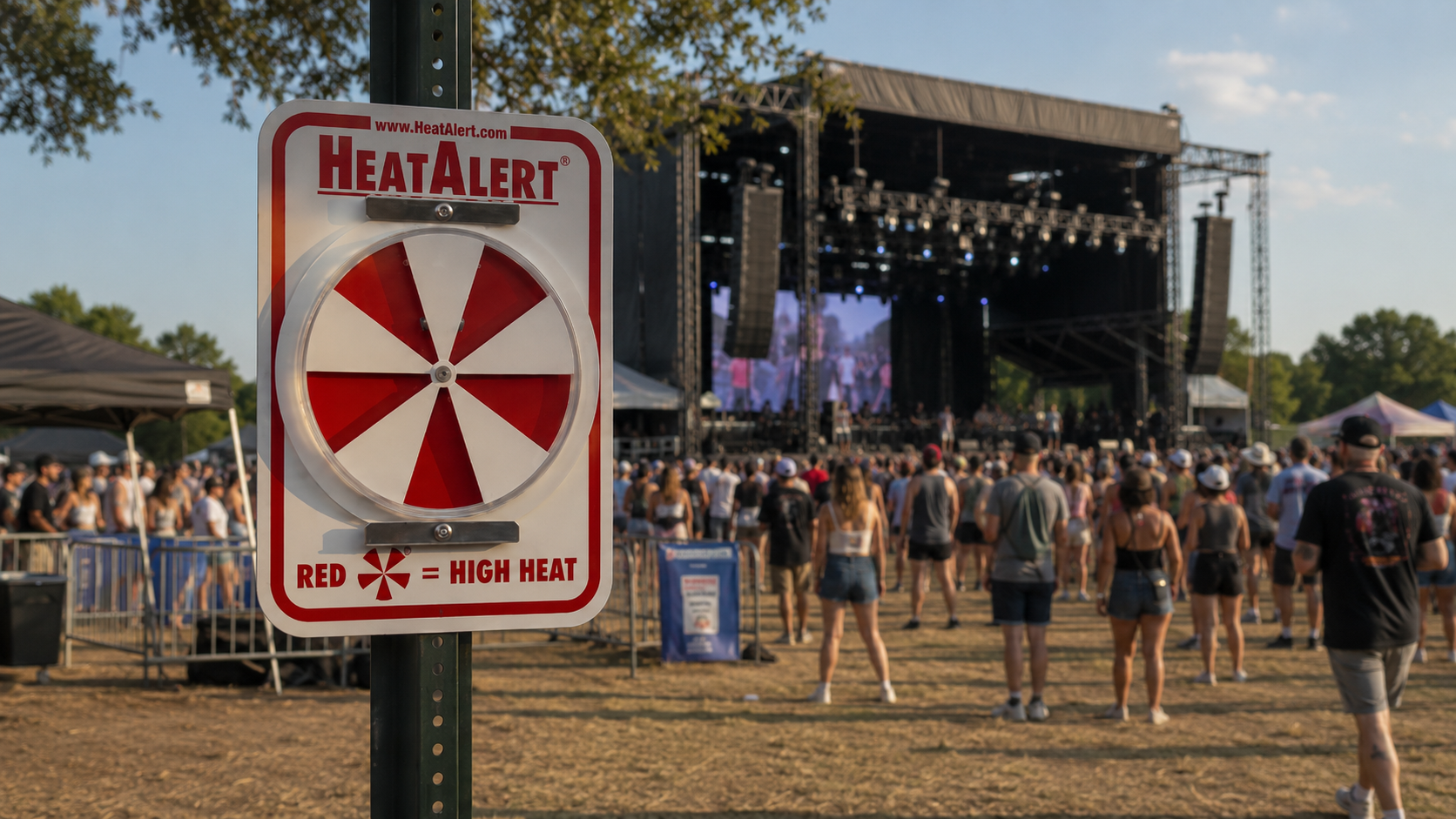
There's a dangerous assumption at the center of most summer safety plans: that people know when it's too hot.
They don't. Not reliably. And the ones who are least likely to recognize the danger are the ones most likely to get hurt.
The Problem With "It Feels Hot"
Heat illness doesn't work like a twisted ankle. There's no single moment of pain that signals you've crossed a line. Core body temperature rises gradually. Sweat stops working as efficiently. Decision-making degrades before the person even realizes something is wrong. By the time someone feels "too hot," they may already be in the early stages of heat exhaustion.
This is why the standard approach — post a sign that says "drink water," brief employees at the start of the shift, check the weather app in the morning — isn't enough. None of those things tell your people what the temperature is at 2pm on a loading dock in July. None of them are visible at the exact moment someone opens a door and steps into the heat.
The Acclimatization Gap
Here's the stat that should concern every facilities manager and safety director: 50% of heat-related fatalities occur on a worker's first day on the job — or their first day back after an extended absence.
Acclimatization takes 7 to 14 days. During that window, the body hasn't yet adapted to regulate heat as effectively. Sweat response is slower. Heart rate climbs more quickly. The person looks fine. They feel fine. And then they don't.
Workers returning from vacation, injury leave, or a long weekend are in the same risk category as brand-new hires. Your most experienced employees can be your highest-risk employees on a Monday morning in August.
What "Temperature Awareness" Actually Means
Knowing it's hot outside is not the same as understanding what that temperature means for the human body at that moment.
True temperature awareness requires three things working together:
A measurement that reflects real conditions. Air temperature is a starting point, not the full picture. Heat index — which factors in humidity — is a more accurate indicator of how conditions actually feel and how the body responds. For workplaces, WBGT (Wet Bulb Globe Temperature) is the gold standard because it also accounts for radiant heat and air movement.
A visible signal at the right moment. An email alert, a morning briefing, or a phone app does nothing for the person who steps outside at 3pm when temperatures have climbed 15 degrees since the morning check. The warning needs to be at the transition point — the door, the gate, the loading dock — where the decision to go outside actually happens.
A prompt that requires no action to be seen. Your employees shouldn't have to check anything. The moment someone reaches for a door handle, the warning should already be in their line of sight.
Where HeatAlert™ Fits
HeatAlert is a passive temperature warning sign that mounts permanently at building exits. At normal temperatures it's white. As ambient air temperature approaches 85°F, the disc begins rotating to red. At 91°F it's fully red — a visible, unmistakable signal that everyone walking through that door can see simultaneously. No app, no announcement, no one has to read a number and decide what it means.
It measures air temperature only — not heat index or WBGT. That's an important distinction. HeatAlert isn't a compliance instrument and it's not a substitute for the tools your EHS team uses to make formal activity decisions. What it is: an always-on, passive visual cue that conditions have crossed a threshold worth paying attention to. It prompts the right behavior — check conditions, enforce water and rest breaks, consider modified activity — at exactly the moment it's needed.
No batteries. No calibration. No maintenance. Install it at every outdoor exit and it works for the next seven years without anyone touching it.
The Real Cost of Not Acting
The average direct cost of a heat-related workers' comp claim runs $7,000 to $30,000 — before legal exposure, OSHA citations, or the harder-to-quantify cost of losing an experienced worker for a season or permanently.
A HeatAlert sign costs $189. A typical facility needs six to ten signs. That's a one-time investment under $2,000 that delivers a permanent, visible heat warning at every outdoor transition for the next decade.
Temperature awareness isn't a training initiative or a policy document. It's what people can see when they're about to walk into the heat.
Make heat visible. Shop HeatAlert™ →